How Sellers Can Prepare Their Home for Inspection Before Listing
Before You List: How Sellers Can Prepare Their Home for Inspection, Appraisal, and the Buyer’s Loan Type
When most sellers think about getting their home ready to sell, they usually think about the obvious things: cleaning, decluttering, freshening up the paint, making the house smell nice, and hiding the laundry basket like company is coming over in ten minutes.
And yes, all of that matters.
But there is another part of preparing your home for the market that does not get talked about enough: getting your home ready for the inspection and the appraisal before a buyer ever walks through the door.
Because here is the thing: selling your home is not just about finding a buyer who loves it.
It is also about making sure the home can successfully make it through the next steps after the offer is accepted. That includes the buyer’s inspection, the appraisal, and sometimes the property condition requirements tied to the buyer’s loan type.
That last part is where a lot of sellers get surprised.
A buyer may walk in, love the house, write a great offer, and seem perfectly qualified. But if they are using FHA or VA financing, the appraiser may flag certain repairs that need to be completed before the loan can close. And those repairs may be completely separate from what the buyer asks for after their private home inspection.
In other words, the inspection is one conversation.
The appraisal can be another.
And if you are the seller, you want to understand both before you go on the market.
Let’s talk about how to prepare.
First, Let’s Separate the Inspection From the Appraisal
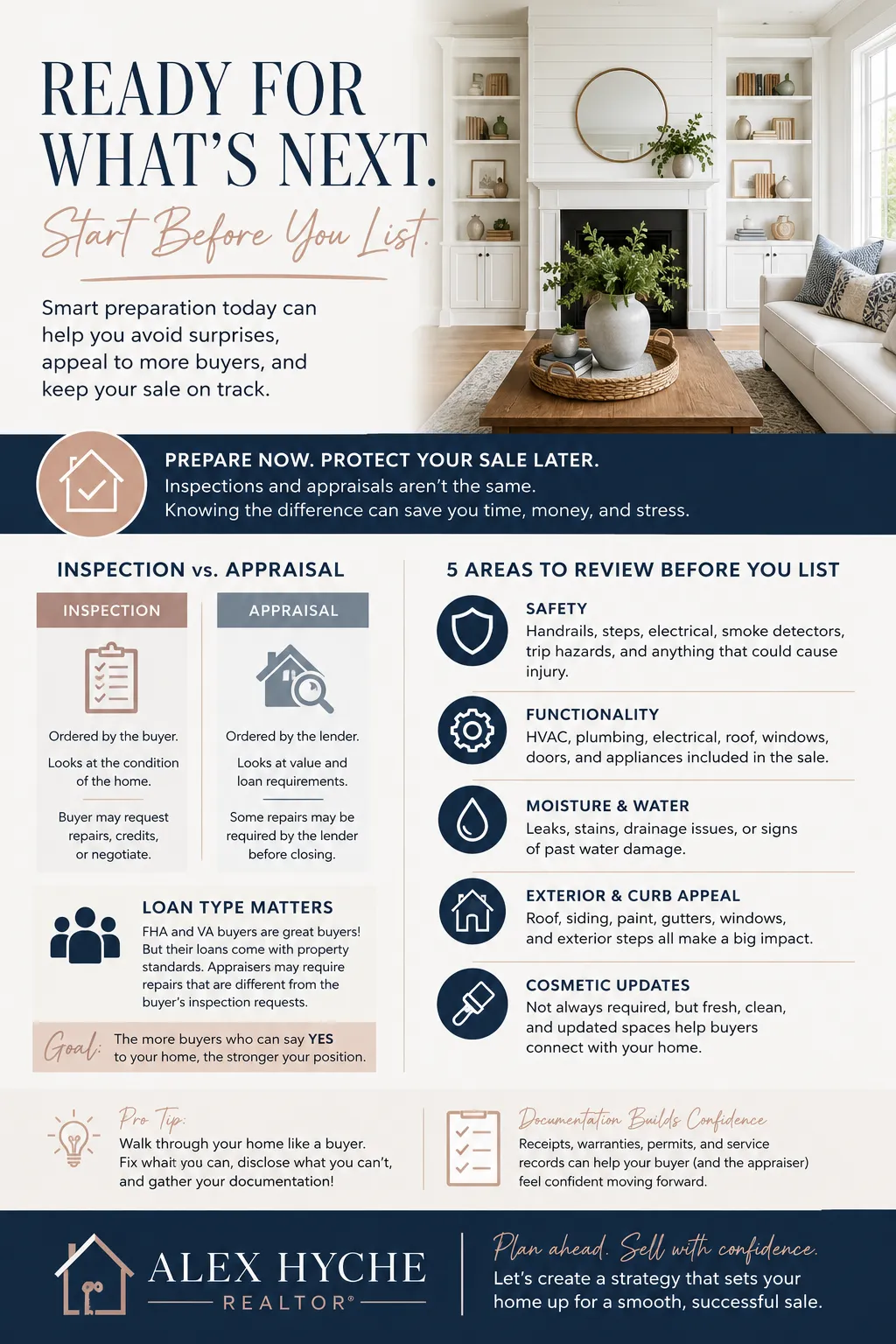
A home inspection is typically ordered by the buyer after they go under contract. The inspector looks at the condition of the home and gives the buyer a detailed report. The buyer may then ask the seller to make repairs, offer credits, reduce the price, or they may decide to move forward as-is depending on the contract terms.
The appraisal is different.
The appraisal is ordered by the buyer’s lender. The appraiser’s job is to determine whether the home supports the purchase price and, depending on the loan type, whether the property meets certain minimum condition standards.
So, while the inspection is more about the buyer understanding the home, the appraisal is tied to the lender and loan approval.
That means a seller can feel like they already negotiated inspection repairs, only to later find out the appraiser has called out something else that must be corrected before closing.
That is when everyone starts looking around like, “Wait, where did this come from?”
And that is exactly why preparation matters.
Why Sellers Should Think About Buyer Loan Types Before Listing
Not every buyer is bringing the same type of financing to the table.
Some buyers use conventional loans. Some use FHA loans. Some use VA loans. Some pay cash. Each option can affect the transaction differently.
As a seller, this does not mean one type of buyer is automatically better than another. It means your home’s current condition should help guide the strategy.
Before listing, one of the questions I want sellers to think through is this:
Are we preparing this home to appeal to the widest pool of buyers possible, or are there condition concerns that may make certain loan types harder to work with?
That is an important conversation.
Because if your home is in great condition, opening the door to FHA, VA, conventional, and cash buyers may help increase your buyer pool.
But if the home has peeling paint, safety issues, missing handrails, non-working systems, roof concerns, exposed wiring, broken windows, or other obvious repair needs, then certain loan types may become more challenging.
That does not mean the home cannot sell.
It just means the strategy needs to be honest from the beginning.
And let me tell you, “hope and vibes” is not a listing strategy. It is cute on a coffee mug, but not in a real estate transaction.
FHA and VA Buyers May Come With Additional Property Standards
FHA and VA loans are wonderful loan programs that help many buyers purchase homes. They can be especially helpful for first-time buyers, veterans, active-duty military members, and buyers who may not be using a large down payment.
But these loans also come with property condition requirements.
The big idea is this: the home needs to meet certain standards for safety, soundness, and habitability.
That means the appraiser may call out repairs that are considered health, safety, or structural concerns.
Common examples may include:
Peeling or chipping paint, especially on older homes
Missing handrails where safety is a concern
Broken windows
Exposed wiring
Non-functioning major systems
Roof issues that affect the home’s condition
Water intrusion or visible moisture problems
Trip hazards or unsafe steps
Missing flooring or unsafe surfaces
Plumbing, heating, or electrical concerns
Signs of structural issues
Utilities that are not properly functioning
Safety concerns inside or outside the home
Now, does every FHA or VA appraisal turn into a repair list? No.
But if the home has obvious condition issues, it is better to discuss them before listing than to act shocked later when the appraiser points at the same thing everybody’s been stepping over for five years.
You know that loose railing everybody in the family knows not to lean on?
The appraiser does not have that family memo.
Inspection Repairs vs. Appraisal-Required Repairs
This is where sellers really need to pay attention.
After the inspection, a buyer may ask for repairs. Those requests are usually negotiated between the buyer and seller based on the contract.
But appraisal-required repairs are different.
If the appraiser notes a repair as a condition of the loan, that item may need to be completed before the buyer’s lender will allow the loan to close.
That means the seller may not be dealing with a buyer preference anymore. They may be dealing with a lender requirement.
Here is a simple way to look at it:
Inspection request:
The buyer is asking for something.
Appraisal-required repair:
The lender may require something for the loan to move forward.
That distinction matters.
A buyer may say, “We would like the seller to repair the loose handrail.”
An appraiser may say, “The handrail needs to be repaired before this loan can close.”
Same handrail. Different level of pressure.
And when you are close to the finish line, nobody wants a handrail to become the villain of the whole transaction.
Should Sellers Make Repairs Before Listing?
Sometimes, yes.
Sometimes, no.
That is why a good listing consultation is not just about picking a price and taking pretty pictures. It should also include a walk-through of the home’s condition, the likely buyer pool, and the possible financing types that may show up.
Before listing, sellers should look at repairs in a few categories.
1. Safety Repairs
These are items that could create risk for the buyer or anyone walking through the home.
Examples include loose railings, exposed wiring, broken steps, missing smoke detectors, unsafe flooring, or anything that could cause someone to trip, fall, or get hurt.
These are often worth addressing before going live because they can come up during showings, inspections, and appraisals.
2. Functionality Repairs
These are items related to whether major parts of the home are working properly.
Think HVAC, plumbing, electrical, water heater, appliances included in the sale, doors, windows, and other systems.
If something is not working, sellers should decide upfront whether to repair it, disclose it, price accordingly, or limit the type of buyer they are targeting.
3. Moisture and Water Issues
Water is one of those things that can make buyers nervous fast.
A small stain, an active leak, moisture in the crawl space, or signs of past water damage can turn into a much bigger conversation once the inspection report comes back.
If you know there is a water issue, deal with it before listing if possible.
If it has already been repaired, keep documentation.
Receipts, contractor notes, warranty information, and photos can help tell the story clearly.
4. Exterior and Curb Appeal Repairs
The outside of the home matters more than many sellers realize.
Peeling paint, damaged trim, missing siding, roof concerns, broken gutters, cracked windows, or unsafe exterior steps may not only affect buyer perception, but may also become appraisal concerns depending on the loan type.
The buyer’s first impression starts before they open the front door.
If the outside looks neglected, buyers may assume the inside has been neglected too.
That may not be fair, but real estate is not always fair. Sometimes it is emotional with a side of judgment.
5. Cosmetic Updates
Cosmetic updates are different from repairs.
Paint color, older cabinets, dated light fixtures, worn carpet, or older countertops may affect buyer appeal, but they may not always create inspection or appraisal problems.
This is where strategy matters.
Sometimes a seller should make cosmetic updates to increase buyer interest.
Sometimes the better move is to price the home appropriately and let the buyer make changes after closing.
Not every home needs to be turned into a Pinterest board before listing.
But every home does need a thoughtful strategy.
The Big Question: Do You Want the Largest Buyer Pool Possible?
If you want to attract the widest range of buyers, the home needs to be prepared for the widest range of financing.
That may mean handling certain repairs before listing so FHA, VA, conventional, and cash buyers can all comfortably consider the property.
Why does that matter?
Because the more buyers who can say yes to your home, the stronger your position may be.
A wider buyer pool can create more showings, more interest, and potentially stronger offers.
But if the home has condition issues that may create problems for FHA or VA financing, you may need to be more selective or strategic.
That could mean:
Marketing the home toward conventional or cash buyers
Pricing the home with repairs in mind
Being transparent about known issues
Considering whether repairs should be completed before listing
Preparing sellers for possible appraisal repair requirements
Evaluating each offer based on more than just the purchase price
Because the highest offer is not always the strongest offer.
A high offer with financing that does not fit the home’s condition may create stress, delays, repair demands, or even a failed closing.
And nobody wants to get emotionally packed, mentally moved, and then have the deal fall apart over repairs that should have been discussed earlier.
Why “As-Is” Does Not Always Mean What Sellers Think It Means
A lot of sellers say, “I just want to sell it as-is.”
That is completely understandable.
But sellers need to know that selling as-is does not automatically erase every issue.
“As-is” usually means the seller does not want to make repairs as part of the inspection negotiation. However, if the buyer is using financing and the appraisal requires repairs, that can still become a problem.
The lender does not care that the seller said “as-is” in the listing description.
The lender cares whether the property meets the loan requirements.
So yes, you can list a home as-is.
But if the home needs repairs that may prevent certain loan types from closing, that needs to be part of the strategy from day one.
Otherwise, “as-is” can turn into “as-stressed,” and we are not doing that.
What Sellers Should Do Before Going on the Market
Before listing your home, here are a few smart steps to take:
Walk Through the Home Like a Buyer
Try to look at your home with fresh eyes.
I know that is hard when you have lived there for years. You stop seeing certain things.
That broken cabinet? It becomes part of the family.
That loose doorknob? Everybody knows the trick.
That stain on the ceiling? You know it is from a leak that was fixed three years ago, but the buyer does not know that.
Walk through the home and ask:
What looks broken?
What looks unsafe?
What looks unfinished?
What would make a buyer nervous?
What would an inspector likely write down?
What would an appraiser possibly flag?
Gather Documentation
If you have made repairs or updates, gather the receipts and documentation.
This may include:
Roof repair or replacement records
HVAC service records
Water heater replacement receipts
Electrical repairs
Plumbing repairs
Foundation or waterproofing documentation
Appliance warranties
Contractor invoices
Permits, if applicable
Documentation builds confidence.
It helps buyers feel like the home has been cared for, not just cleaned up for pictures.
Be Honest About Known Issues
One of the worst things a seller can do is pretend a known issue does not exist.
The inspection will likely find it.
The buyer may feel blindsided.
The transaction may become tense.
And the seller may lose leverage.
It is better to address known issues upfront and decide how they fit into the pricing, marketing, and negotiation strategy.
A well-prepared seller is not scared of the truth.
A well-prepared seller uses the truth to make better decisions.
Consider a Pre-Listing Consultation Before Spending Money
Please do not run to the hardware store and start buying random things before talking to your Realtor.
Some repairs are worth doing.
Some are not.
Some updates may help your sale.
Some may just drain your wallet and give you a new relationship with frustration.
A strong Realtor can help you decide what matters most based on your home, your budget, your timeline, and the type of buyer most likely to purchase your property.
The goal is not to make your home perfect.
The goal is to make your home market-ready.
Those are not always the same thing.
The Bottom Line for Sellers
Preparing your home for the market is about more than making it look good online.
It is about understanding what can happen after the offer is accepted.
The inspection, appraisal, loan type, repair negotiations, and buyer expectations all play a role in whether a deal closes smoothly.
If your goal is to attract the most buyers possible, then preparing for FHA, VA, conventional, and cash buyers may be the right move.
If your home has repair concerns and you do not have the ability or desire to make certain repairs, that does not mean you cannot sell. It simply means your listing strategy needs to reflect that from the beginning.
That is where having the right Realtor matters.
A good Realtor is not just there to put your home on the MLS and hope the internet does its thing.
A good Realtor helps you look around corners.
A good Realtor helps you prepare for the inspection before the inspection.
A good Realtor helps you understand how the buyer’s financing may affect your sale.
And a good Realtor helps you make decisions that protect your time, money, and peace.
Because selling your home should not feel like playing defense the whole time.
It should feel like having a plan.
And when you have the right plan before you list, you are not just putting your home on the market.
You are positioning it to sell with confidence.
Thinking About Selling Your Home in Indianapolis?
Before we talk about listing photos, staging, and pricing, let’s talk about preparation.
I help sellers understand what may come up before they go on the market so they can make smart decisions, avoid unnecessary surprises, and position their home for the strongest possible sale.
If you are thinking about selling your home in Indianapolis or the surrounding areas, let’s walk through the strategy together.
Your home does not have to be perfect.
But your plan should be solid.